
Thescreescore – More than a decade after its theatrical release, Russell Crowe has offered a candid retrospective on what he believes truly hampered Ridley Scott’s 2010 historical epic, Robin Hood. Despite reuniting the formidable duo behind the Oscar-winning Gladiator, this ambitious retelling of the legendary outlaw’s origin story notably failed to captivate critics or audiences in the same vein, prompting a recent revelation from its star.
Taking to X (formerly Twitter), Crowe recently pinpointed a crucial factor in the film’s lukewarm reception: a significant 17-minute excision from the theatrical version. "The director’s cut is the movie we all thought we were releasing," Crowe asserted, lamenting the impact of these cuts. He passionately argued, "A minute is a long time on screen. Imagine any of your favourite movies with 17 minutes of the most emotional connective tissue removed… watch the director’s cut." His comments suggest a fundamental disconnect between the filmmakers’ original vision and what ultimately reached multiplexes, implying a narrative stripped of its core emotional resonance.
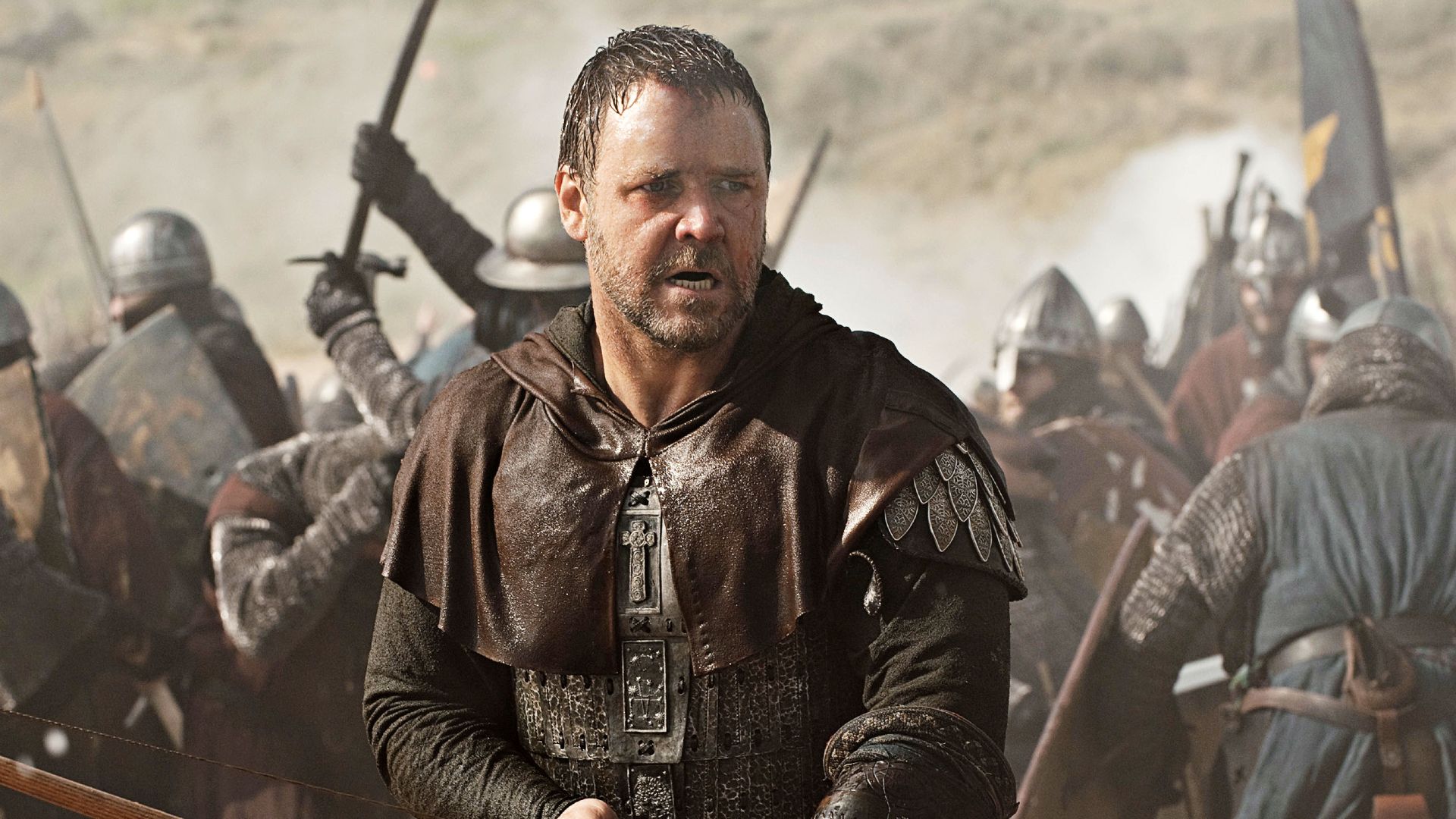
Further elaborating, Crowe revealed his personal creative contributions to the project. He confirmed that the innovative concept of "Robin Hood" as a generational title, rather than a single individual, originated from his research into the legend’s enduring appeal and its ties to "Greene Man mythology." More strikingly, Crowe disclosed that the 2010 film was initially envisioned as merely the first chapter in a grander narrative, "to be told in 3 parts," hinting at an ambitious, unfulfilled trilogy that would have explored the character’s origins and evolution across multiple installments.

Related Post

For those curious to experience the filmmakers’ intended vision, the unrated director’s cut of Robin Hood is readily available through digital platforms like Apple TV and Amazon, and on specially marked physical media. This extended version, running at a more substantial 156 minutes, reportedly restores crucial elements, including expanded battle sequences and enriched character arcs, particularly for Cate Blanchett’s portrayal of Marion.
Financially, Robin Hood struggled to meet expectations. Produced on an estimated budget of $200 million, its global box office tally reached only $321 million. This figure paled in comparison to Gladiator‘s impressive $465 million decade prior, and by industry standards, the film likely needed to gross closer to $500 million worldwide just to break even, making its performance a significant disappointment for Universal Pictures.
Critically, the film faced widespread censure. Reviewers frequently cited its excessively grim tone, a perceived absence of character depth, and a notable lack of the swashbuckling fun often associated with the Robin Hood legend. Even with a stellar supporting cast featuring talents like William Hurt, Mark Strong, Oscar Isaac, Matthew Macfadyen, and Max von Sydow, Robin Hood garnered a mere 43% on Rotten Tomatoes, with its audience Popcornmeter score slightly higher at 58%.
Intriguingly, Robin Hood stands as the final cinematic partnership between Crowe and Scott, concluding a prolific decade that also saw them collaborate on A Good Year (2006), American Gangster (2007), and Body of Lies (2008). While the future of their creative alliance remains uncertain, Crowe’s recent remarks underscore a lingering regret over the compromises made to the 2010 film’s theatrical presentation, suggesting a profound belief that audiences missed out on the true scope of their vision, a vision that, perhaps, only the director’s cut truly embodies. For more insights into cinematic history and behind-the-scenes revelations, keep an eye on thescreescore.com.



Leave a Comment