
Thescreescore – Alejandro G. Iñárritu’s latest cinematic venture, "Digger," has emerged as one of the year’s most talked-about — and undeniably peculiar — films. Starring Hollywood titan Tom Cruise, the Warner Bros. satire has captivated and confounded audiences with its audacious narrative structure. Following months of anticipation surrounding Cruise’s role as the titular Digger Rockwell, the finished product delivered an unexpected meta-twist, prompting both critical debate and fervent discussion. Now, both Cruise and Iñárritu have offered insights into the film’s unconventional core, shedding light on the artistic intentions behind its divisive reveal.
"Digger" was initially promoted as a high-stakes satire, depicting Cruise’s eccentric character collaborating with the U.S. President and other figures to avert a self-inflicted global catastrophe. The ensemble cast features formidable talents like John Goodman, Riz Ahmed, Emma D’Arcy, Sandra Hüller, Michael Stuhlbarg, and Jesse Plemons. However, roughly thirty minutes into its 128-minute runtime, the film unveils its true nature: the audience isn’t merely watching a movie, but a play being performed within the film itself. This bold narrative choice, kept under wraps during the film’s marketing, transforms the viewing experience entirely.
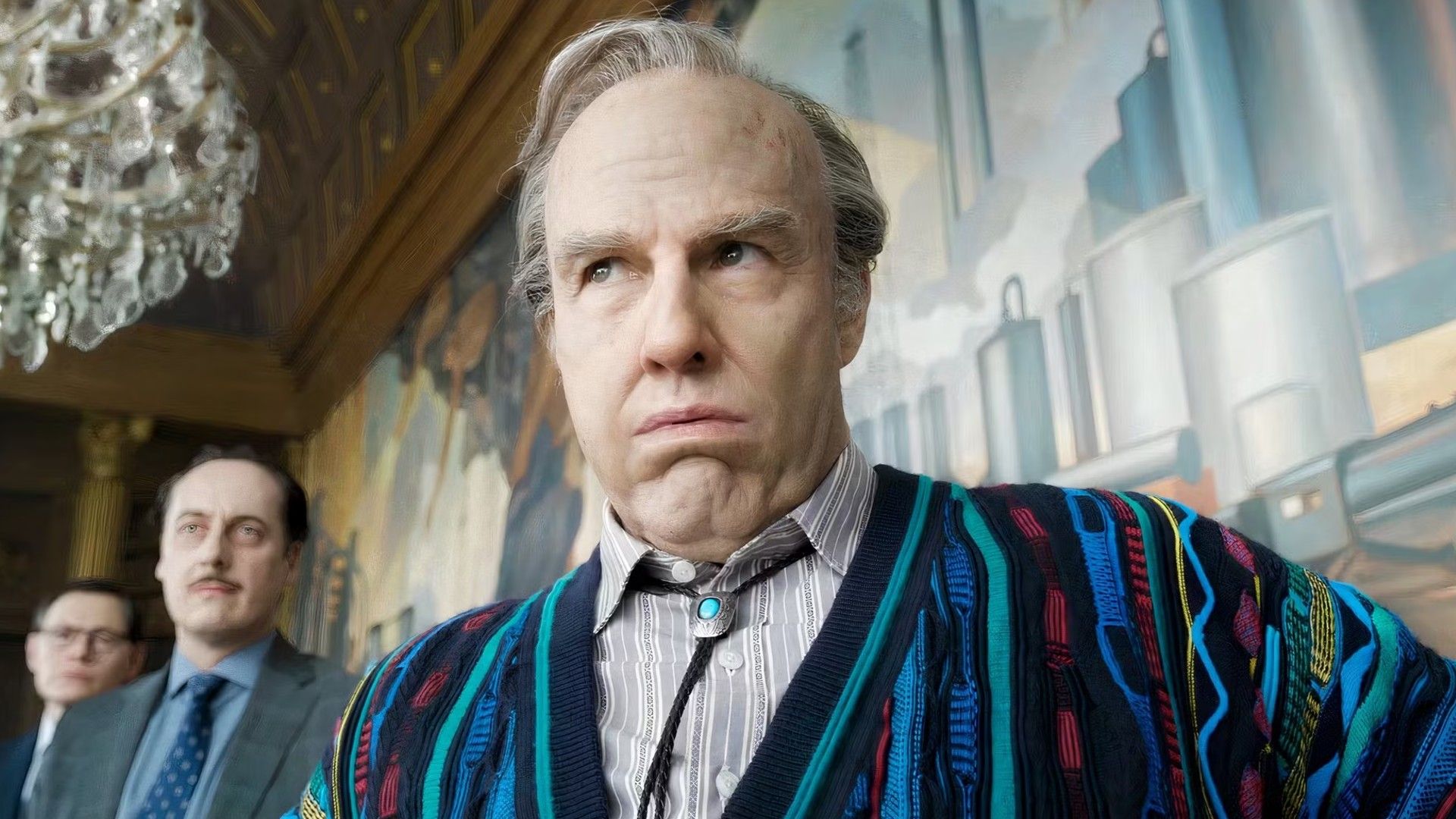
During a recent industry screening at the Academy Museum, Iñárritu, an Oscar-winning filmmaker, articulated the profound challenges inherent in simultaneously crafting a theatrical production and a cinematic feature. "The most challenging thing was that, obviously, we were doing a play and a film, and you are serving two different art forms," he explained, noting the distinct requirements for vocal projection and physical performance in theatre versus the intimacy of film. This dual format, he elaborated, necessitated specific technical considerations for the stage setting, leaving subtle "crumbs" for astute viewers to piece together the unfolding reality. "It’s not a trick," Iñárritu asserted, suggesting that once understood, the audience would retrospectively grasp the "weirdness" they initially perceived. The delicate balance lay in preventing the "play" from veering into outright farce, a line the creative team meticulously navigated.

Related Post


The theatrical framework also mandated a dialogue-rich approach, prioritizing the exploration and discussion of complex ideas. Yet, this presented its own hurdles in terms of pacing and tone. Iñárritu candidly recalled moments of creative frustration: "Oh my God, this is not working. This is a piece of s–t." Early scenes felt "too naturalistic" and lacked the intended humor. It was through rigorous rehearsals and a focus on physicality that the team discovered the right cadence, allowing actors to transition into a "B mode" that conveyed "human-vulnerability certainty" rather than a grand, monolithic performance. This, he concluded, allowed the film to function as "a satire with very deep, problematic things that we are dealing with, but everything is performative."
Tom Cruise further illuminated the ambitious scope of "Digger," revealing that his performance encompasses not one, but three distinct personas: "Digger A, Digger B, and Curtis." Cruise described the immense undertaking of internalizing each character’s "ideas, the tone, the world, the culture, the goals, and the dreams." He expressed profound admiration for the role, stating he had "never seen a character like this ever," which compelled him to develop the character’s unique accent organically, without a dialogue coach. His objective, he explained, was to "ground a character in an emotional reality" within the satirical and dramatic context. "As an actor, I’m looking for that commonality," Cruise reflected, finding it in the transition from Digger to Curtis. "I think there’s a Curtis in all of us, in some ways. And there’s a Digger in all of us."
Before the explicit reveal—a stage crew member emerging from a collapsing environmental set piece—Iñárritu subtly wove in visual and auditory cues. Rockwell’s window views often adopt a painterly, artificial aesthetic, hinting at fabricated surroundings. Scenes frequently extend for unnaturally prolonged durations, contributing to a pervasive sense of unease. The character of Curtis, the actor playing Digger, frequently questions the "naturalness" of the play’s elements, providing a meta-commentary that retrospectively justifies the film’s unique cadence and aesthetic.
Despite the profound intentionality behind its design, "Digger’s" twist has polarized audiences and critics alike. The film currently holds a nearly even 51% on Rotten Tomatoes, signaling its divisive nature. Early box office projections are equally sobering, with an estimated $8 million domestic debut—a surprisingly low figure for a Tom Cruise vehicle.
Regardless of its commercial or critical reception, "Digger" undeniably represents a bold artistic endeavor. Iñárritu and Cruise’s recent interview underscores the meticulous thought and effort invested in creating a hybrid experience that blurs the lines between theatre and cinema. Whether this ambitious experiment ultimately resonates with viewers remains an open question, but its audacity is beyond dispute.






Leave a Comment