
Thescreescore – While many horror films rely solely on jump scares to unsettle their audience, Adam Scott’s Hokum achieves something far more profound by weaving supernatural dread with a deeply human exploration of trauma. What begins as a chilling tale of a haunted Irish hotel evolves into a complex psychological study of a man drowning in his own past. For viewers looking to grasp the layers of this atmospheric thriller, the ending provides a much-needed emotional catharsis that redefines the film’s entire narrative.
The film follows Ohm, a celebrated but morose author whose internal darkness is as heavy as the fog rolling off the Irish coast. His journey to a rural hotel—a place tied to his parents’ history—is initially a descent into isolation. However, the disappearance of a kind hotel employee, Fiona, forces Ohm out of his self-pity and into a confrontation with a terrifying local legend: a witch trapped within the hotel’s wedding suite.
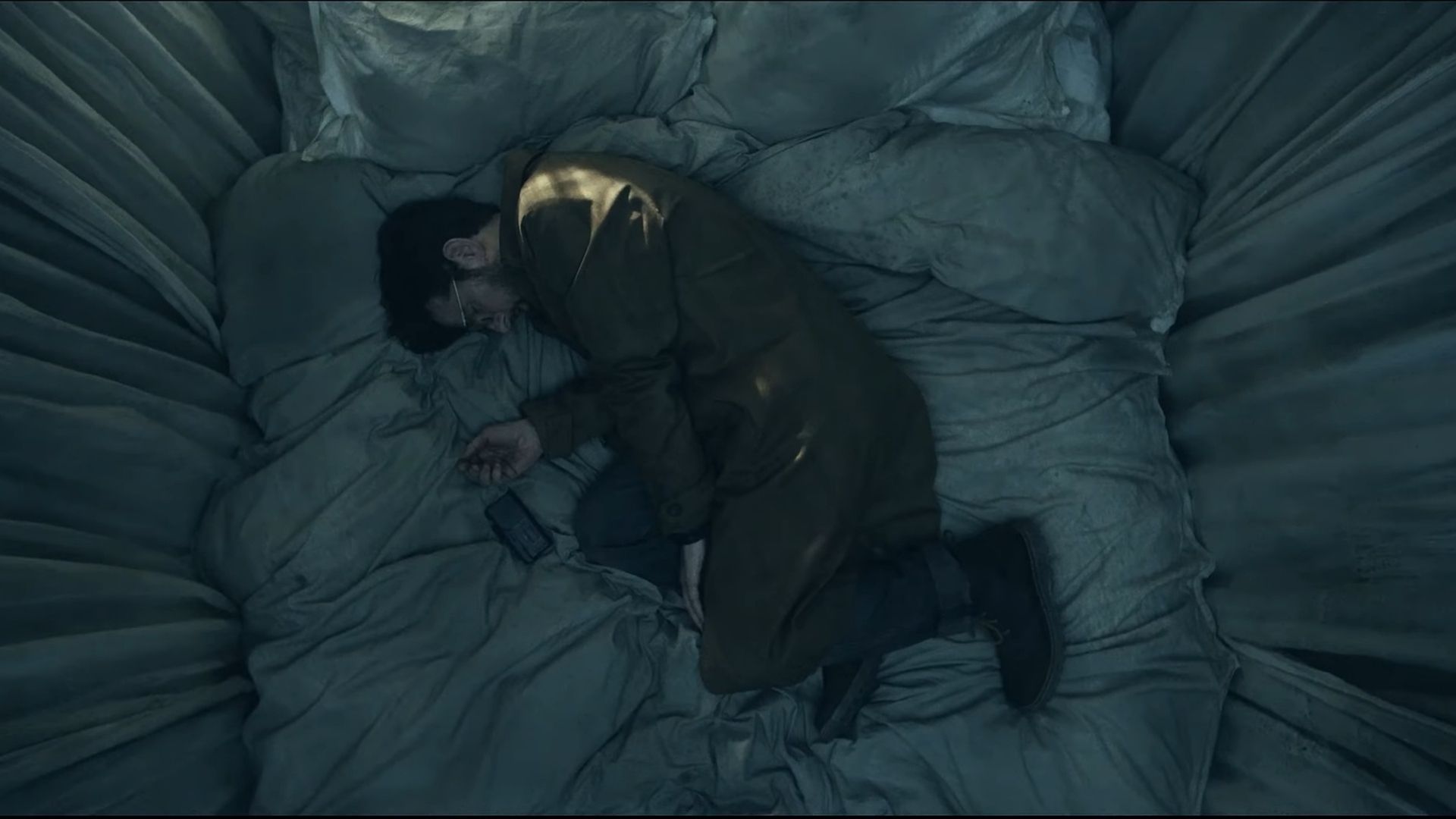
To understand the climax, one must distinguish between the film’s two primary "monsters." The witch is not a traditional villain; rather, she functions as a personification of mortality and the inevitable pull of the afterlife. She is a force of nature, a cosmic consequence that drags souls into the dark. The true antagonist, however, is Mal, the hotel manager. Unlike the witch, who is an elemental force, Mal is a creature of pure, unrepentant malice. It is revealed that Mal murdered Fiona to hide the truth of an affair, abandoning her to the witch’s domain. While Ohm is haunted by his mistakes, Mal is defined by his lack of remorse, making his eventual demise at the hands of the witch a moment of grim poetic justice.

Related Post


The true "ghost" haunting Ohm, however, is not a supernatural entity, but a childhood tragedy. The film masterfully reveals that Ohm’s depression stems from the accidental death of his mother—a trauma he has carried like a lead weight for decades. The witch uses these memories to torment him, nearly pushing him toward a suicidal end. Yet, in a stunning subversion of horror tropes, the film offers Ohm absolution. Through a spiritual encounter with his mother’s essence, Ohm finds the forgiveness he has denied himself, allowing him to escape the witch’s grasp and, more importantly, his own despair.
This internal shift is beautifully mirrored in Ohm’s professional life. The film begins with him planning a bleak, nihilistic end to his famous Conquistador book series—a reflection of his desire to die. By the film’s conclusion, his revised ending for the character is one of apology and companionship. As he emerges from the ordeal, Ohm is no longer the man who sought to end his life; he is a man who has learned to live with his history.
Ultimately, Hokum is a masterclass in thematic horror. It posits that while we cannot escape death, we can find salvation through accountability and the courage to face our regrets. It is a rare genre piece that uses the macabre to illuminate the path toward healing.







Leave a Comment