
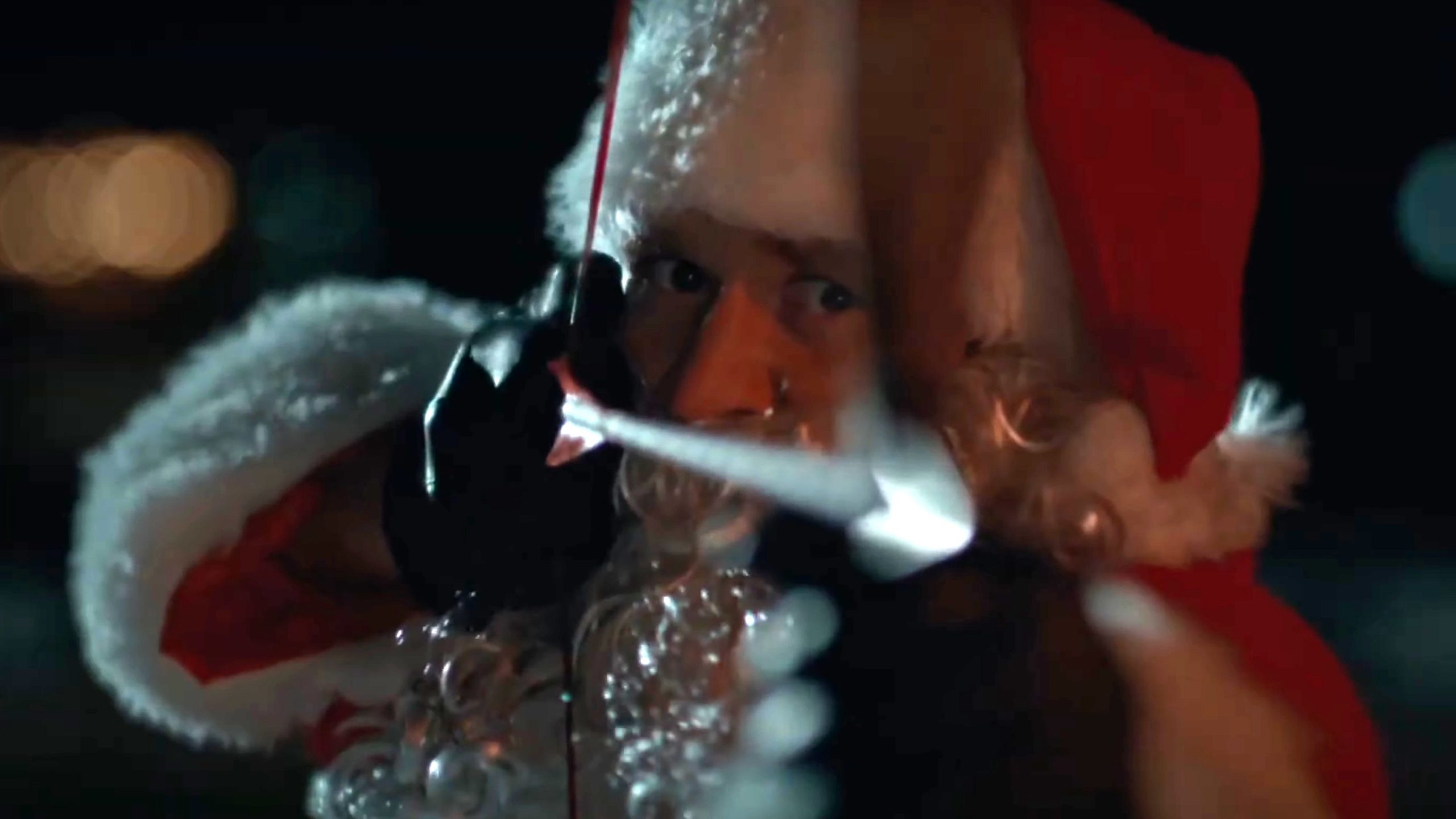
Thescreescore – The latest reimagining of the cult classic horror franchise, Silent Night, Deadly Night, has unleashed a chilling new interpretation of Billy Chapman onto the cinematic landscape, and its creative team is already brimming with ideas for its future. This second reboot of the beloved slasher series stars Rohan Campbell, known for Halloween Ends, as Billy, a young man haunted by the traumatic murder of his parents by a figure in a Santa Claus suit. Driven by this deep-seated trauma and the sinister influence of an internal voice named Charlie, Billy embarks on a murderous spree, targeting those he deems wicked.
The film, which also features Ruby Modine from Happy Death Day and Mark Acheson of Elf fame, delves into Billy’s psychological torment as he grapples with his violent impulses. His journey takes an unexpected turn when he encounters Pam (Modine) in a quaint small town, sparking a desire for a life free from bloodshed. However, as Charlie’s hunger for violence intensifies and local children begin to vanish, Billy finds himself pushed to his limits.
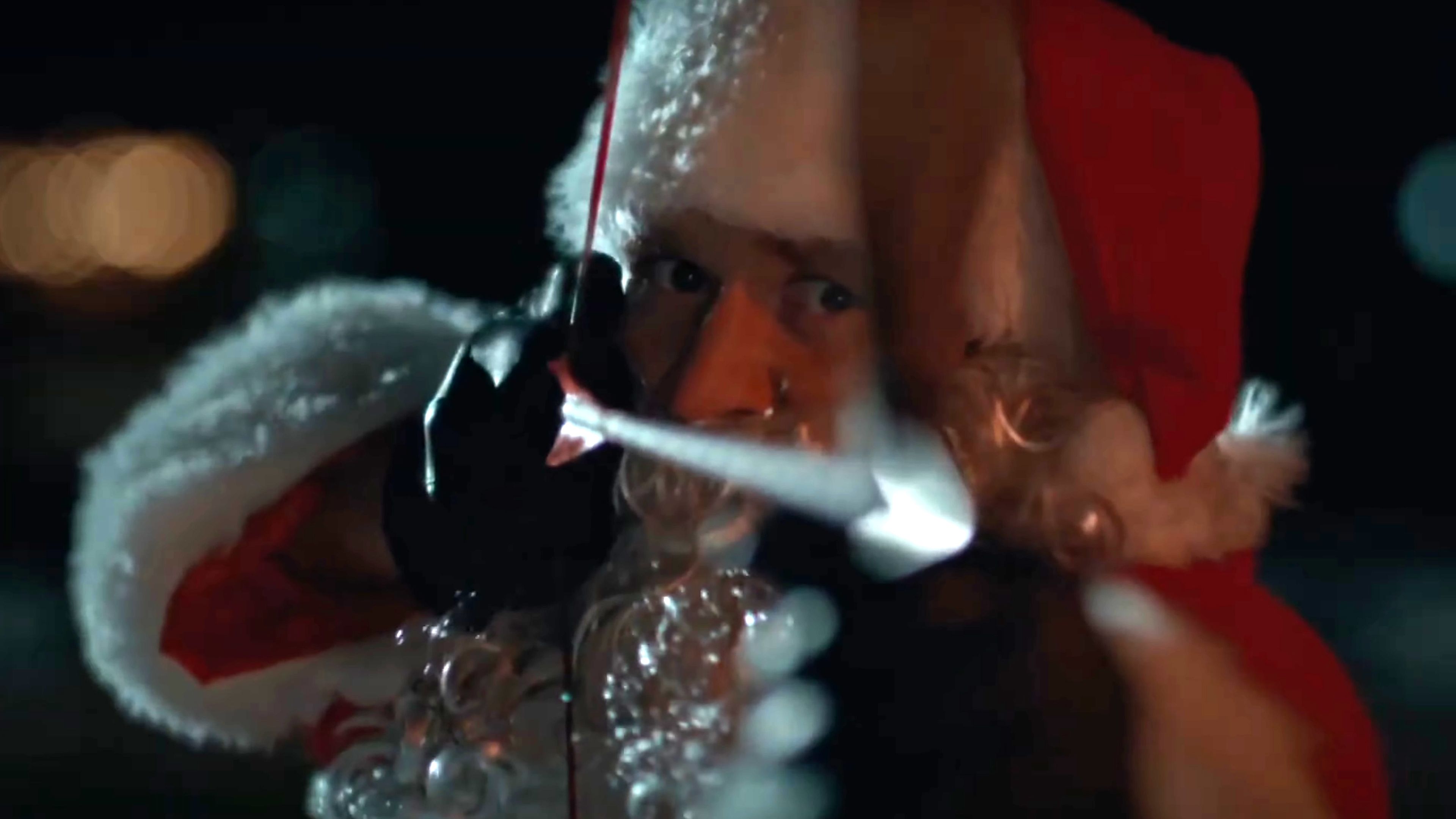
The narrative culminates in Silent Night, Deadly Night‘s provocative ending, where Billy reveals the shocking truth to Pam: Charlie is the consciousness of his parents’ murderer, transferred into him at the moment of the killer’s death. Together, they confront the abductor, a confrontation that leaves Billy mortally wounded. In a final, desperate act, Billy transfers Charlie’s consciousness to Pam, setting the stage for a truly unique and unsettling future for both characters.

Related Post


Following the film’s release, which garnered a largely positive reception from critics and audiences, Rohan Campbell, Ruby Modine, and director Mike P. Nelson spoke with thescreescore.com about the movie’s audacious conclusion and the tantalizing prospect of a sequel. Campbell, reflecting on Billy’s ultimate demise, found the narrative choice compelling. "I couldn’t see it end any other way," he stated, praising Nelson’s innovative approach as "a fun way to pass that baton." He added, "Mike really took the original and sort of just gave it a new twist. I was sad to see Billy go, but obviously he’s probably not gone. I think it’s such a cool way to handle things, and I think Mike’s a bit of a genius for putting that twist on it."
Modine revealed that an earlier draft of the script featured a different conclusion for her character and Billy, though she kept the specifics under wraps. She admitted to being "adamant" in her discussions with Nelson during pre-production, advocating for changes that ultimately led to the final, acclaimed ending. Upon seeing the revised script, Modine was "explosively happy" with the outcome. She vividly recalled filming the pivotal scene on the very last day of production, describing the experience as "serendipitous and cathartic" as the crew worked "until the sun rose." Modine even shared that Nelson’s unintentional announcement of the wrap brought her to tears, as she wasn’t ready to bid farewell to the film’s distinctive world and characters. "I turned and looked at the camera. He panned in, and he said, ‘Cut,’ and he stepped to the side and said, ‘That’s a wrap.’ I was like, ‘No, we have to keep going!’ I could live in Silent Night, Deadly Night for the rest of my life. That world is so pristine."
With the ending clearly paving the way for Pam to potentially inherit the mantle of the Santa-clad killer, and the film enjoying a robust critical and commercial debut, a Silent Night, Deadly Night sequel appears to be a strong possibility. Campbell, while cautious, expressed his eagerness to return, stating, "we’ll leave that up to the powers that be" but requesting, "let us play again" because he would "have so much fun doing that."
Nelson echoed this sentiment, balancing hope with pragmatism. He emphasized that the initial goal was to craft an ending that felt satisfying yet hinted at continuation. However, he is unequivocally ready to helm a follow-up, humorously noting Modine’s frequent inquiries about sequel developments. Modine affirmed her desire to explore the intriguing concept of "dating someone, and then they just live in your head." Nelson then teased, "She reaches out every so often — a lot often. ‘When are we gonna do the sequel?!’ And the answer to your question is, ‘Absolutely, yes.’ There are some really fun ideas that we’ve been toying around with that I really hope that we can do. Because it’s freaking gonzo bats–t."
Campbell also shared insights into his dedication to the horror genre and the physical demands of his role. Drawing lessons from his experience on Halloween Ends, he highlighted the unparalleled connection with fans in the horror community. "There’s no other genre where you can feel this connected with a fan base — on both sides of the fence, no matter how people feel about the movie," Campbell remarked, expressing his genuine love for the genre. He found the duality of Billy—torn between his murderous urges and a yearning for normalcy—a fascinating challenge. "I just thought it was really fun to switch between them both," he explained, noting how Pam’s presence brought out a softer, romantic side, contrasting sharply with the axe-wielding killer.
One of the film’s most talked-about sequences involves Billy’s brutal confrontation with a group of Nazis. Campbell recalled his initial disbelief upon reading the scene in the script. "There’s no way we’re going to actually get this in the movie, is there?" he wondered, only to find himself on set, fully immersed in the "riot" of filming. He relished the opportunity to perform many of his own stunts, working closely with the talented stunt team. Among the many gory moments, Campbell particularly enjoyed the "leg chop" and the "guts spilling out." His favorite kill, however, was the "head split in the armchair," a shot he had to execute with precision on a dummy. "Mike is not cheap on the blood," he quipped, confirming the film’s commitment to visceral effects.
Director Mike P. Nelson discussed the casting of Mark Acheson as the voice of Charlie, revealing that Acheson’s audition was so compelling that he was one of the very first actors cast. Acheson’s ability to convey character through facial expressions, even for a voice-only role, immediately convinced Nelson. Modine, reflecting on Pam’s surprising resilience, mused on her character’s true-crime fascination as a catalyst for embracing the chaos. Despite living in a "cozy, comfy town," Pam’s excitement was "immediately piqued" by Billy’s "dirty little secret," leading to what Modine described as a "true love" connection, a unique bond where it was "either the most epic Mortal Kombat fight or love. There is no in between."
Nelson elaborated on his approach to crafting Billy as a complex, relatable character. He envisioned Billy as an "universal character," a seemingly ordinary person grappling with an internal "demon or a dark side." This duality, Nelson explained, was crucial to avoid a mere "kill-to-kill kind of slasher." He aimed for a film that would "slow down at times" to explore its characters, only to deliver unexpected twists moments later.
Regarding the audacious Nazi-killing sequence, Nelson admitted he anticipated resistance from producers but was pleasantly surprised. "I didn’t have to convince the producer at all," he stated, adding that they were more concerned about a scene where Pam brutally attacks a child with a hockey stick. The Nazi scene, however, was met with universal enthusiasm. Nelson lauded Campbell’s quick mastery of the axe choreography and the crew’s dedication to achieving long, visceral takes, ensuring audiences witnessed Rohan "swinging, and he can take out two people in one shot… It’s him. He’s doing this."
Silent Night, Deadly Night is currently playing in theaters, offering a bold, bloody, and surprisingly nuanced take on a horror classic, with its creative minds eagerly anticipating where Billy and Pam’s twisted journey might lead next.






Leave a Comment